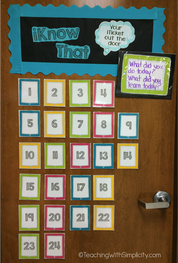
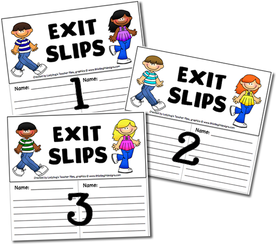
Exit Slips are a tool used to check students understanding of new material. This strategy requires students to respond to proposed questions either at the end of a lesson or the end of a class period. This in turn, will help students reflect on what they have learned and allows teachers to quickly assess students understanding of the material.
Why use exit slips?
There are three categories of exit slips (Fisher & Frey, 2004):
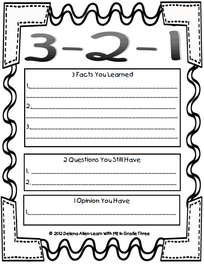
1. At the end of a lesson, the teacher should ask each student to respond to a provided prompt. The prompt should be categorized in one of the three ways (as mentioned above): • Prompts that document learning • Prompts that emphasize the process of learning • Prompts to evaluate the effectiveness of instruction 2. When students are done answering the prompt, collect all of the exit slips 3. Review the exit slips to determine if the instruction needs to be altered to better meet the needs of all students OR address the questions students have about the material
|
|
|
|
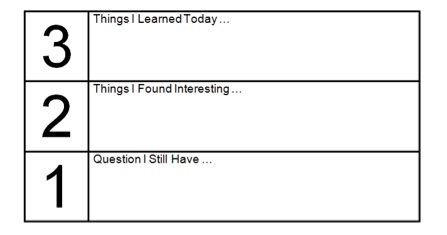
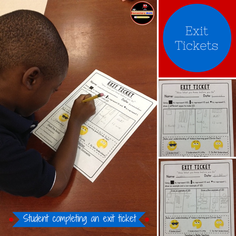
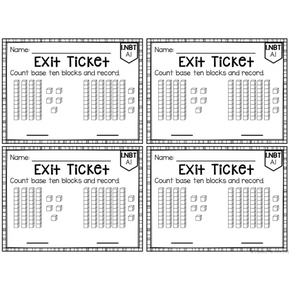
Content Examples
|
|
Resources:
All About Adolescent Literacy. (n.d.). Retrieved October 5, 2015, from http://www.adlit.org/strategies/19805/
Exit slip. (2014, July 3). Retrieved October 5, 2015, from https://www.youtube.com/watch?v=fvL3c1he5fw
Fisher, D., and Frey, N. (2004). Improving Adolescent Literacy: Strategies at Work. New Jersey: Pearson Prentice Hall.
How to do Exit Slips - TeachLikeThis. (2013, October 9). Retrieved October 5, 2015, from https://www.youtube.com/watch?v=tN-R_KPtKp8
Simon, C. (n.d.). Exit Slips - ReadWriteThink. Retrieved October 5, 2015, from http://www.readwritethink.org/professional-development/strategy-guides/exit-slips-30760.html
Wagner, Barb. "Sharing Responses to Literature via Exit Slips." Classroom Notes Plus August (2005): 1-3. Web.
All About Adolescent Literacy. (n.d.). Retrieved October 5, 2015, from http://www.adlit.org/strategies/19805/
Exit slip. (2014, July 3). Retrieved October 5, 2015, from https://www.youtube.com/watch?v=fvL3c1he5fw
Fisher, D., and Frey, N. (2004). Improving Adolescent Literacy: Strategies at Work. New Jersey: Pearson Prentice Hall.
How to do Exit Slips - TeachLikeThis. (2013, October 9). Retrieved October 5, 2015, from https://www.youtube.com/watch?v=tN-R_KPtKp8
Simon, C. (n.d.). Exit Slips - ReadWriteThink. Retrieved October 5, 2015, from http://www.readwritethink.org/professional-development/strategy-guides/exit-slips-30760.html
Wagner, Barb. "Sharing Responses to Literature via Exit Slips." Classroom Notes Plus August (2005): 1-3. Web.
